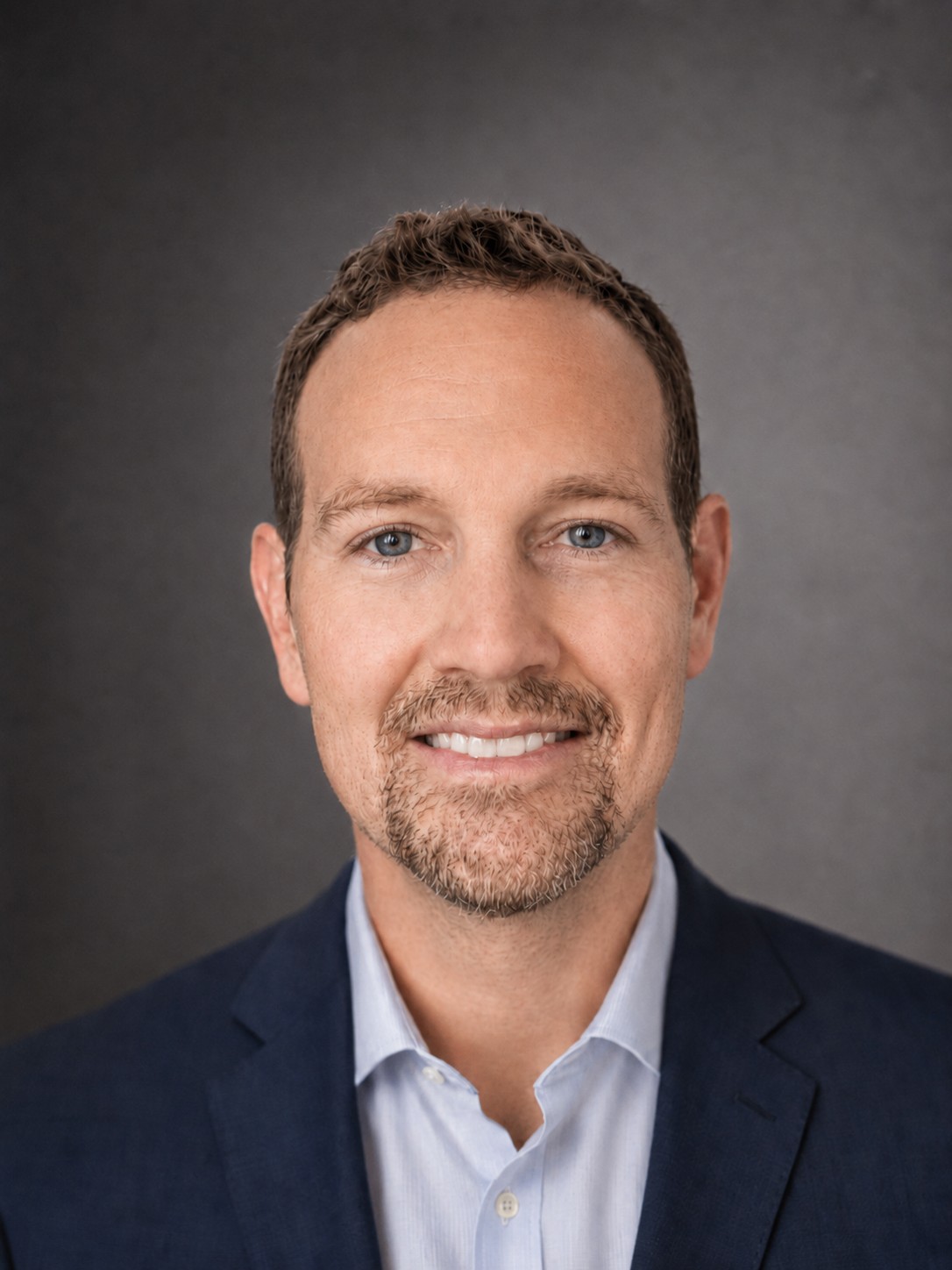
Chief Financial Officer · Industrial manufacturing

Robert McFarlin, CMA

I’m the CFO of RCM Industries, a manufacturer with six entities and four plants. I joined in 2014 as accounting manager. These days most of my work is building the systems finance runs on, from capital approval and reporting to automation and controls.

I am based out of Greenville, SC. In my time away from work, I enjoy watching baseball, racing, and playing disc golf.

15 yrs
Accounting and finance
12 yrs
At RCM Industries
6
Entities
4
Plants
Robert McFarlin
Robert McFarlin, CMAGreenville, SC

Results

What has changed since 2023

I became CFO in 2023. These are the changes I’d point to first.

3×Available creditAfter we ran a competitive bank process
−50 bpsBorrowing costSame refinancing
4Locations on one HRISPayroll and HR on one system
1stInternal audit functionThe company’s first

What we built

The finance team runs on these today.

  • Reporting. We rebuilt company reporting on a Microsoft Fabric lakehouse with a Direct Lake semantic model. Production, labor, and financial data now update in close to real time instead of once a month.
  • Capital approval. Big spending requests go through stage gates, the way a private equity firm would run them, and we forecast fixed charge coverage across the whole portfolio before we commit.
  • Automation. The recurring manual work is automated, so the team spends that time on analysis.
  • Internal audit. As the company grew it needed someone looking at governance, compliance, and risk. We built that function from nothing.
  • One HR system. Four locations used to run payroll and HR separately. They now share one HRIS.

Approach

How I think about the job

Most of what I do comes back to one of these questions.

Strategy

Where should we compete?

Put capital into the few things that reinforce each other, and stop funding the rest.

Focus

What actually makes us money?

Find the customers, products, plants, and workflows that drive most of the profit, cash, and risk. It’s usually a short list.

Reporting

How soon can we know?

A month-end package tells you what already happened. I’d rather have operating data every day, forecasts that update quickly, and controls built into the work itself.

Experience

From staff accountant to CFO

I started in accounting at ScanSource, a public technology distributor, and joined RCM in 2014. I’ve held four roles there since.

Career at a glance

Three promotions in nine years at RCM, from accounting manager to CFO.

RCM Industries, Inc.2023 – Present

Chief Financial OfficerCurrent

  • Put our primary banking relationship out to competitive bid. Available credit tripled and borrowing cost fell 50 bps.
  • Rebuilt company reporting on Microsoft Fabric, with production and financial data in near real time.
  • Set up a stage-gate capital approval process, modeled on how private equity firms review investments, with fixed charge coverage forecast across the portfolio.
  • Automated recurring finance work, started internal audit, and moved payroll and HR for four locations onto one system.

RCM Industries, Inc.2017 – 2022

Corporate Controller

  • Built the company’s financial reporting from scratch in Power BI, on an imported semantic model.
  • Led the accounting, AP/AR, and payroll teams across four plants.
  • Built consolidated forecasting models for planning and resource allocation, and owned reporting for the six-entity group.

RCM Industries, Inc.2016 – 2017

Division Controller

  • Owned the plant P&L.
  • Built KPI dashboards for inventory, carrying costs, and operating drivers, and worked with plant operators on efficiency projects.

RCM Industries, Inc.2014 – 2016

Accounting Manager

  • Prepared and analyzed financial statements for multiple manufacturing plants.
  • Simplified multi-plant reporting so people could trust the numbers.

ScanSource, Inc.2011 – 2014

Staff Accountant

  • Managed balance-sheet reconciliations and revenue accounting at a public technology distributor.
  • Was the finance lead on the SAP implementation, responsible for making sure the data came through the cutover intact.

Capabilities

Skills, and where I’ve used them

Each of these is tied to real work at RCM.

Capital and banking

Capital allocation
Stage-gate approvals for major spending, with fixed charge coverage forecast across the portfolio.
Banking
Ran the process that tripled our revolver and cut borrowing cost 50 bps.

Data and automation

Microsoft Fabric and Power BI
Built company reporting on production, labor, and margin in Power BI, then moved it to a Fabric lakehouse with Direct Lake.
Finance automation
Took recurring manual work off the team’s plate so they can spend the time on analysis.
One HR system
Moved four locations onto one HRIS, so finance and operations count people the same way.

Controls and reporting

Internal audit
Started the function from scratch. It covers governance, compliance, and risk.
Group reporting
One consistent set of numbers across a six-entity group.
Plant KPIs
Dashboards for production, inventory, and operating drivers that the plant teams actually use.

Tools and leadership

Excel, VBA, and Power Query
The multi-plant reporting and forecasting models I built as controller.
Python and ETL
Scripts that move data and automate recurring tasks.
Leadership
Took teams at four plants through new systems, new controls, and a change of bank.

Credential

Certified Management Accountant (CMA)Institute of Management Accountants

Graduate

Master of AccountancyStetson University

Undergraduate

B.S. Business Administration, AccountingUniversity of South Carolina Upstate

Continuing study

Financial modeling, data analytics, strategy, and valuationContinuing education

Principles

Five rules I work by

How I run a finance team, and what the people around me can expect.

  1. 01

    Make progress you can measure

    Every system, report, or automation has to move the business forward in a way I can measure and defend.

  2. 02

    Give more in value than you receive in compensation

    Deliver clear answers early, raise problems before they get expensive, and work for the whole company.

  3. 03

    Everyone sweeps the floor

    No task is beneath the person accountable for the result.

  4. 04

    Share good news quickly, and bad news even quicker

    The sooner the people who can act hear about a problem, the smaller the fix.

  5. 05

    Treat every experience as a chance to learn

    When something goes wrong, ask what we saw too late and how to see it sooner next time.

Outlook

Where the CFO role is going

I expect the most valuable CFOs of the next decade to own the data systems that produce the forecast.

Happening now

What’s already changing

  • AI agents doing routine accounting and finance work
  • Daily operating data shortening the monthly close
  • Spreadsheets used for analysis instead of as the system of record
  • CFOs owning data systems as well as the books
In progress at RCM

What I’m building

  • AI agents that answer financial and operating questions
  • Direct Lake semantic models as the main way people read the general ledger
  • Plain-English questions as the query interface for operations
  • Modular finance systems in place of one large ERP

Contact

If you’re working on any of this, I’d like to hear about it.

I’m always glad to compare notes with other finance and operations people on capital, banking, data, automation, and where the CFO role is headed. LinkedIn is the fastest way to reach me.

Connect on LinkedIn